Machado Returns to Post-Maduro Venezuela
The opposition leader arrived in Caracas after a cross-country journey, following the US removal of President Nicolás Maduro and a new oil concession.
By Evan Carter ·
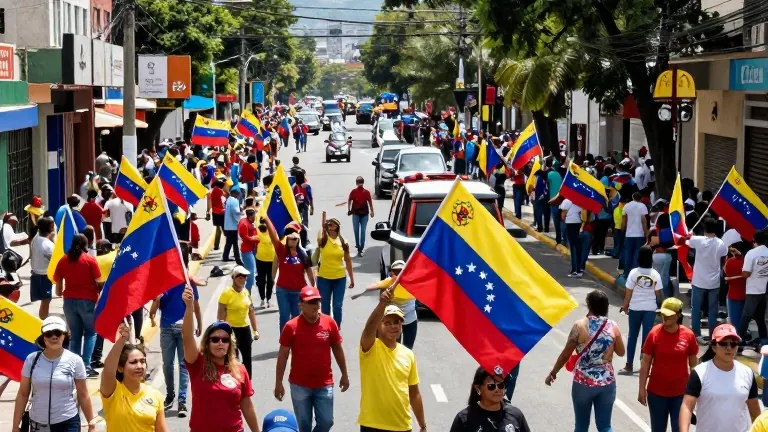
Maria Corina Machado arrived in Caracas on Monday after driving across Venezuela from Lara state, completing a journey that took her through crowds of supporters who had lined the route. This return marks the end of a ten-month absence that began when she left the country in December to accept the Nobel Peace Prize in Oslo. Her departure was a covert operation at night, but her return was a public, loud event characterized by open defiance.
The political environment in which Machado is returning is fundamentally different from the one she left. President Nicolás Maduro is no longer in power. US troops removed him from office on January 3, and he now faces charges in New York for drugs, weapons, and torture, to which he has pleaded not guilty. Delcy Rodríguez, Maduro’s former vice-president, has assumed the presidency and established a new relationship with Washington that contrasts sharply with the mutual animosity of the past.
The shift in US policy creates a complex dynamic for the opposition leader. When Machado left, she was viewed in Washington as the preferred alternative to Maduro. Now, the Trump administration appears satisfied with Rodríguez, who has signed a major oil deal with the United States. This agreement grants the US a 100-year concession for 65 billion barrels of Venezuelan crude. The deal was reached with North American Blue Energy Partners, a private company led by Alejandro Betancourt. Machado has criticized this agreement, though she has directed her criticism primarily at Rodríguez and Betancourt rather than President Trump.
Supporters in Caracas described Machado’s return as a source of hope and a step forward in the electoral process. Twenty-year-old Gregory Noriega, wearing a Vente Venezuela sweatshirt, stated that her return represents hope. An eighteen-year-old named Hilary, who waited in the streets, echoed this sentiment, while her friend Manuel noted that the country is no longer scared. Beningno Alarcon, a Venezuelan political analyst, called the return the most significant political event since January 3. He noted that Machado’s presence on the ground provides the opposition with solid leadership, moving beyond a solely exiled movement.
Data suggests the political atmosphere has shifted in favor of public expression. A joint study by the think tanks Polis and Nexo found that Venezuela experienced three times as many street protests in the first nine months of 2026 as it did in all of 2025. Furthermore, the repression of these demonstrations has decreased by more than half. This environment of reduced fear may allow Machado to galvanize an electorate that had previously hesitated to speak out.
The return coincides with US-brokered talks between the government and the opposition. Secretary of State Marco Rubio stated that Machado’s safe return was the direct result of these reconciliation talks. Despite this, Machado still faces domestic charges of treason and conspiracy of insurrection, which she and her allies have long called politically motivated. She made at least eight prior attempts to return before receiving the green light from the Trump administration.
Interim President Delcy Rodríguez has described the cross-country event as a show, and state television ignored the livestreamed celebration. However, Rodríguez appears prepared to hold talks with Machado to maintain harmonious relations with Washington. Trump has called Rodríguez wonderful and a terrific person, though he expects full submission on key issues like energy. Reports indicate that Secretary Rubio may influence major decisions in the oil-rich nation through regular communications with the interim president.
Source: BBC News