Six citizens demand court order protecting public's right to news
A new federal lawsuit argues that White House media bans violate the First Amendment rights of ordinary Americans who rely on independent reporting.
By Maya Desai ·
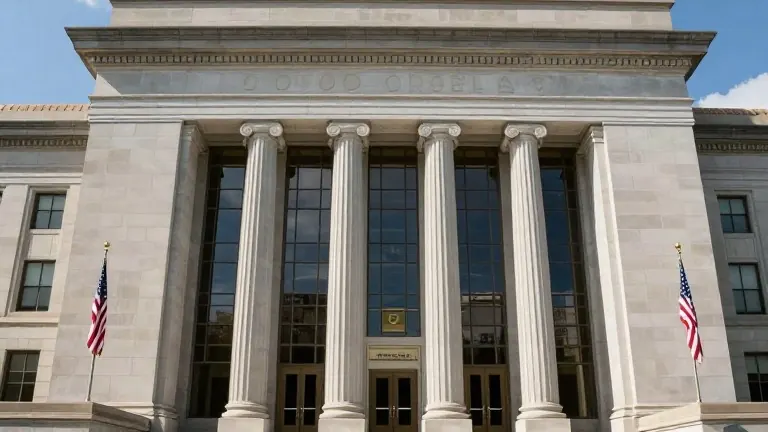
Six New York residents filed a federal lawsuit on Monday against President Donald Trump, arguing that the administration's exclusion of specific news outlets from the White House deprives the general public of its right to independent information. The complaint, submitted to a federal district court in New York, shifts the legal focus from the press itself to the audience that consumes the reporting.
The suit names Trump, White House Chief of Staff Susie Wiles, Communications Director Steven Cheung, and Secret Service Director Sean M. Curran as defendants. It claims the administration's policy of banning outlets based on their coverage creates a viewpoint-based restriction on a limited public forum. The plaintiffs seek a broad injunction that would bar the White House from enforcing these bans against any news organization, both current and future.
The legal action follows a series of disputes between the administration and media companies. In September, journalists from CNN, MS NOW, and Politico were banned from White House premises. A federal judge extended a temporary order preventing the enforcement of that ban, but CNN continues to dispute its exclusion from the video pool covering presidential travel. Separately, The Associated Press is litigating over its exclusion from the Oval Office and Air Force One, which officials linked to the outlet's refusal to rename the Gulf of Mexico. The New York Times is challenging a Pentagon escort policy, and ABC is involved in a dispute over broadcast license renewals.
Katie Fallow, deputy litigation director at the Knight First Amendment Institute, stated that the First Amendment protects the public's right to know what its government is doing. "The White House cannot decide what information Americans receive by punishing critical reporting," she said. "When the White House expels reporters because of their coverage and threatens others with expulsion, it isn’t just the press that suffers, the public loses access to independent reporting and gets something closer to government propaganda."
The plaintiffs represent a cross-section of news consumers who rely on diverse reporting for their professional duties. They include Kenneth Roth, former executive director of Human Rights Watch and a Yale lecturer; Daniel Froomkin, editor of Press Watch; and Beverly Gage, a Pulitzer Prize-winning historian at Yale. The group also includes Peter Schmidt-Nowara, a civics teacher at Brooklyn Technical High School; Benjamin Wittes, editor-in-chief of Lawfare; and Ethan Young, a student journalist at the University of Pennsylvania.
Schmidt-Nowara told the court he is gravely concerned that the restrictions are cutting off access to crucial information. "I joined this lawsuit because my students deserve to know what’s happening in their government and to hear from a free and independent press," he said. Young, who cannot personally access White House press spaces, argued that he relies on a diverse cohort of reporters to serve as his proxy. "A vibrant free press allows me to do just that," he noted in the complaint.
The complaint states that the injury extends to the democratic public. "The ultimate injury here … is to the democratic public," the suit reads. It argues that every journalist reporting from the White House must now account for the possibility that critical words may result in their access being revoked, which inevitably deprives the public of independent reporting from all outlets.
The Trump administration responded to the lawsuit by asserting that no person may demand access to the Oval Office. A White House official said in a statement that media outlets peddling misinformation and defamation are capable of reporting their stories from directly outside the building.
The plaintiffs are seeking a declaration that the policy is unconstitutional because it imposes unreasonable, viewpoint-based restrictions. They also ask the court to bar the defendants from enforcing the policy, which would create a legal shield for news organizations covering the White House regardless of their editorial stance.
Source: ABC News